How humidity affects the AC every day
Cooling the air and drying it
Every air conditioner does two jobs at once. It lowers the temperature, and it pulls moisture out of the air. Warm, humid air passes over the cold indoor coil, water condenses on the coil and drips away through the condensate drain.
In Cape Coral, removing moisture is a big part of what an AC does every day. When it falls behind, the thermostat may show a comfortable number while the house feels sticky.
Why damp air feels warmer
How humidity affects the AC also shows up in energy use and comfort at night. Damp air feels warmer than dry air at the same temperature, so people turn the thermostat lower, which makes the system run longer without solving the real problem.
Signs the AC is not drying the air
Once you know how humidity affects the AC, these signs are easier to spot.
Clammy skin indoors
The room feels cool, but your skin still feels sticky.
Musty smells
Damp air lets mildew grow in closets and corners.
Fogged windows
Water collects on the inside of the glass on humid mornings.
Damp towels that never dry
Bathrooms and laundry rooms stay humid for hours.
Short cycling
The system cools quickly, shuts off and never runs long enough to dry.
Water at the air handler
The drain cannot keep up with the water the coil removes.
What causes high humidity with the AC running
These are the most common reasons an AC leaves a Cape Coral home feeling sticky.
| Cause | Why it matters | What helps |
|---|---|---|
| Fan set to On | Water on the coil is blown back into the house between cycles | Set the fan to Auto |
| Oversized system | Cools so fast it shuts off before removing much moisture | Settings, airflow tuning or a properly sized system later |
| Dirty indoor coil | Less contact between air and coil, so less water removed | Coil cleaning |
| Low refrigerant | Coil runs at the wrong temperature | Leak repair and correct charge |
| Clogged filter | Low airflow upsets how the coil works | A fresh filter |
| Leaky ducts | Humid attic air is drawn into the system | Sealing duct joints |
Thermostat settings that lower indoor humidity
A few small settings change how humidity affects the AC more than most people expect.
- Set the fan to Auto, not On.
- Keep a steady temperature rather than big swings.
- Use bathroom and kitchen exhaust fans when showering and cooking.
- Keep windows and doors closed while the AC runs.
- If your thermostat has a dehumidify setting, ask how to use it with your system.
AC repairs that bring humidity down
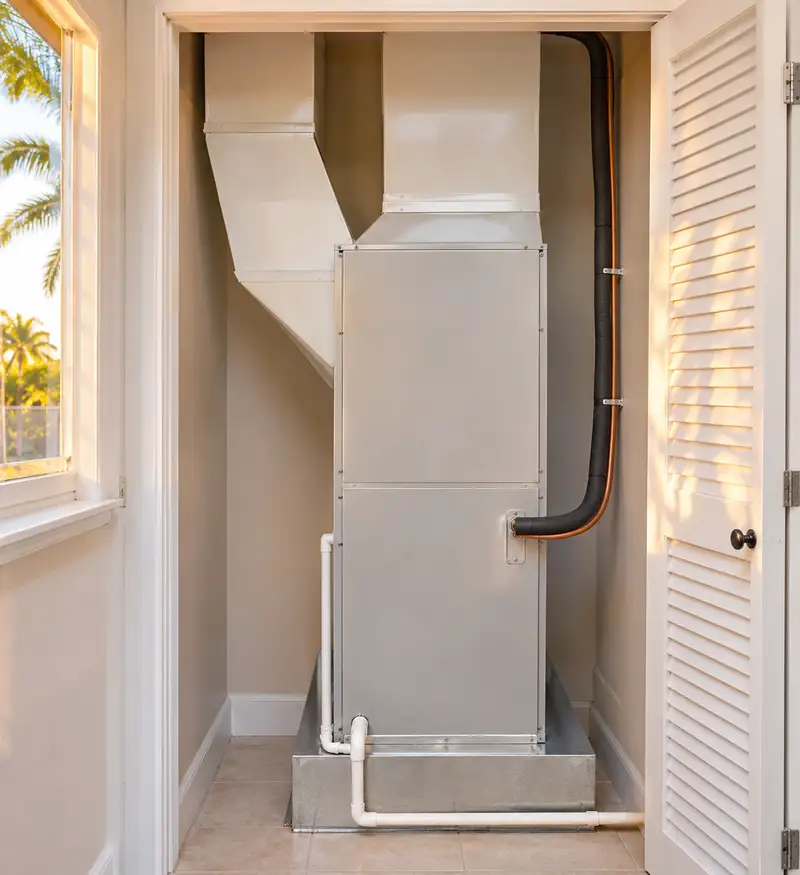
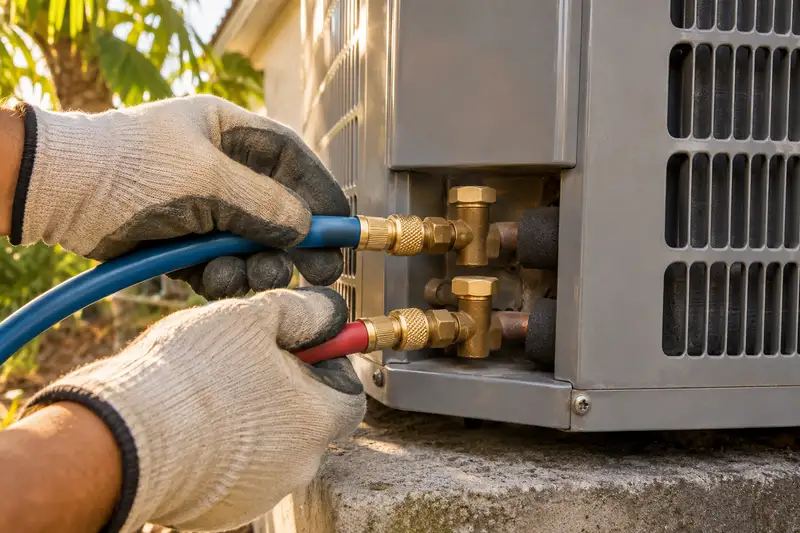
If settings do not help, the cause is usually inside the system. A technician can measure how much moisture the AC is removing and why it is falling short.
- Cleaning a dirty indoor coil so air contacts it properly.
- Finding and repairing a refrigerant leak, then charging correctly.
- Adjusting blower speed so air moves across the coil at the right pace.
- Sealing duct leaks that pull humid attic air into the system.
The technician walks you through the moisture readings and the fix that suits them, and nothing starts until you agree.
How humidity leads to mildew in your home
Damp air does more than feel uncomfortable. Over time it can encourage mildew on walls, in closets and inside the air handler. A clean coil, a clear drain and an AC that runs long enough to dry the air are the best defense.
If you notice a musty smell each time the AC starts, have the drain pan and coil checked. Standing water and dirt there are a common source.
When a dehumidifier makes sense
The AC alone is usually enough when
- The system is sized correctly.
- Coils are clean and charge is right.
- The fan runs on Auto.
- The house is reasonably sealed.
Extra dehumidifying may help when
- A room stays damp regardless of settings.
- The system is oversized and short cycles.
- Parts of the house are closed up for long periods.
- Humidity stays high even with the AC working well.
How your AC removes water from the house
Air crosses the coil
Warm, damp room air is pulled over the cold indoor coil.
Water condenses
Moisture turns to droplets on the coil fins, like water on a cold glass.
The drain carries it out
Droplets fall into the pan and run down the condensate line outside.
On a sticky day, a busy system can send many gallons of water down that line. That is why a clear drain matters so much here, and why a blocked one often shows up first as water on the floor.
Rooms that stay damp the longest
Bathrooms
Showers add a lot of moisture. Run the exhaust fan during and after.
Laundry rooms
Dryer vents must lead outside, never into the house or garage.
Kitchens
Cooking steam needs the range hood, ideally one vented outdoors.
Closed rooms
Rooms with shut doors and no return vent can stay damp.
Closets on outside walls
Cool, still air lets mildew settle on clothes and shoes.
Garages with air handlers
Warm garage air leaking into the return adds humidity.
Controlling humidity while you are away from home
How humidity affects the AC also matters when nobody is home. A closed house in a humid climate can grow mildew quickly if the AC is switched off. Leaving it running at a higher setting keeps the air drier while you are away.
- Set a steady temperature a few degrees above normal rather than switching off.
- Leave the fan on Auto.
- Leave interior doors open so air can move.
- Ask someone to check for water around the air handler if you are gone for weeks.
Humidity questions
Why does my house feel humid when the AC is on?
The fan may be set to On, the system may be oversized, the coil may be dirty or the refrigerant may be low.
Can an AC be too big?
Yes. An oversized system cools quickly, shuts off and does not run long enough to remove much moisture.
Why does my house feel damp after rain?
Humid outdoor air finds its way in through doors, leaks and ducts. A healthy AC should catch up within a few hours.
Can leaky ducts make a house humid?
Yes. Return ducts with gaps can pull damp attic or garage air into the system.
Why does my AC seem to cool fast but the air feels heavy?
A system that cools the room quickly and shuts off may not run long enough to pull out moisture. That is common with oversized systems and can be improved with airflow and settings.
Can a musty smell come from the ducts?
It can, especially if humid air leaks into them. More often it comes from a damp drain pan or a dirty coil, which are easier to clean.
Is water around the air handler linked to humidity?
Yes. More moisture in the air means more water through the drain. A partly blocked drain may cope on dry days and overflow on sticky ones.
Does running the fan on On help humidity?
Usually not here. It can blow water from the coil back into the house between cycles.
What humidity level is comfortable indoors?
Most people feel comfortable when indoor air feels dry and fresh rather than heavy. A simple humidity meter can help you track it.
Do ceiling fans lower humidity?
No, but they make a room feel cooler by moving air across your skin.
Does opening windows help a damp house?
Not while the AC runs. Outside air is usually humid and adds to the load.
Should I switch off the AC when I go away?
In a humid climate, a higher setting is usually better than off, because it keeps moisture under control.
Can a thermostat setting help with humidity?
Keeping the fan on Auto and holding a steady temperature both help. Some thermostats also have a setting that slows the blower to remove more moisture.
How quickly should humidity drop after the AC starts?
A healthy system usually makes the air feel noticeably drier within an hour or two of steady running.
Will cleaning the coil help with humidity?
Often, yes. A clean coil removes moisture far better than a dirty one.
Can humidity damage my AC?
Moisture itself is normal, but a clogged drain or a constantly wet pan can rust parts and grow mildew.
Does a dirty filter affect humidity?
Yes. Low airflow changes how the coil works and can reduce how much moisture it removes.
Does a humid house use more energy to cool?
Damp air feels warmer, so people often set the thermostat lower and the system runs longer. Drier air lets you stay comfortable at a higher setting.
Will a bigger AC fix humidity?
Usually the opposite. A system that is too large removes less moisture. A correctly sized system that runs longer cycles dries the air better.