
How we handle AC repair calls
Licensed technicians
The technician who comes out works on home air conditioning every day.
Clear answers
You hear what failed and why before any repair starts.
Cape Coral homes
We take AC repair calls from homes across Cape Coral.
How an AC repair visit works in three steps
Most AC repairs in Cape Coral follow the same three steps, from your first call to a working system. Knowing them helps you give the technician the details that matter.
Tell us what you notice
Tell us whether you have warm air, water, a noise or a unit that will not run, and give us your ZIP code.
A technician comes out
They test the system, from the thermostat to the outdoor unit, and find the cause.
You choose the fix
You hear the options first, and the work begins only when you say so.
What the technician actually checks
Good AC repair in Cape Coral starts with measurements. A technician checks the thermostat signal, the power to the outdoor unit, the capacitor and contactor, the refrigerant pressures, the airflow across the indoor coil and the condensate drain. Most failures show up in one of those places.
Because systems here run for so much of the year, small wear adds up faster than in milder places. A capacitor that would last years elsewhere can fade sooner when it starts the compressor thousands of times a season.
Nothing starts without you
Work begins only once you agree to it.
Ask about anything
What failed, why it failed and how to stop it again.
Take a day if you need it
If you want time to think it over, tell the technician and decide later.
Why air conditioners in Cape Coral wear out faster
Long, hot and humid summers mean air conditioning runs for much of the year here.
Most AC breakdowns in Cape Coral happen during the first heat waves of the year, when a system that struggled through spring finally stops. Summer and fall storms add flooding, debris and power cuts, which are hard on outdoor units and drains.
That is why AC repair in Cape Coral is as much about keeping the system steady as it is about fixing a single part. Clean coils, a clear drain and a healthy capacitor count for a lot in this climate.
Most homes here heat with a heat pump on the few cold nights of winter. A heat pump that ran in cooling mode all year can fail when you first switch it to heat, so test the heating side before the first cool evening.
Find the AC problem in your home
These are the problems we see most often in AC repair in Cape Coral. Choose the one that sounds most like yours. Each repair page explains the warning signs, the likely causes and what the repair visit covers.
- AC Not CoolingWarm air from the vents
- Heat Pump RepairCooling and heating problems
- Capacitor and ContactorHumming unit, fan not spinning
- Refrigerant LeaksHissing, oily spots, weak cooling
- Frozen AC CoilFrost on the copper lines or coil
- AC Leaking WaterDrips, wet ceilings, full pans
- Thermostat RepairBlank screens and wrong readings
- AC MaintenanceTune ups before the heat
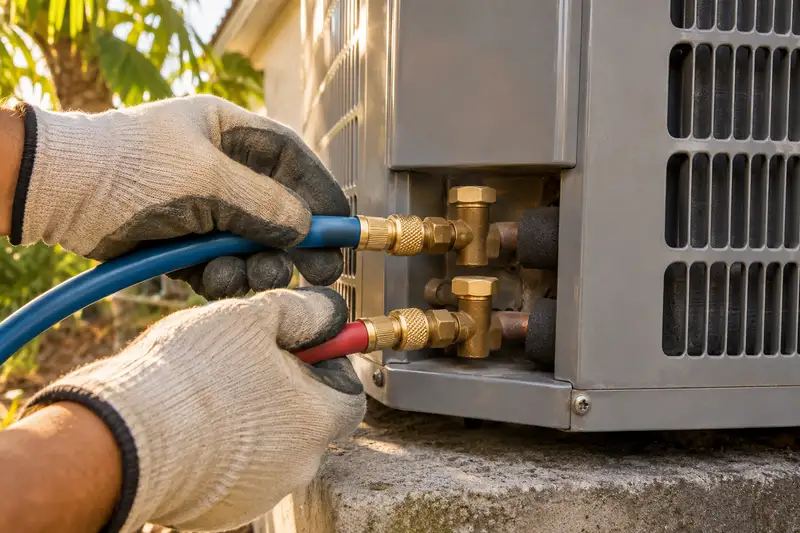
What a repair visit checks
From the thermostat to the outdoor unit
A thorough visit checks each part of the system in the order cooling works through your home. Skipping a step can lead to a repair on the wrong part.
- Thermostat settings, wiring and the call for cooling.
- Breakers, the disconnect and the power reaching the outdoor unit.
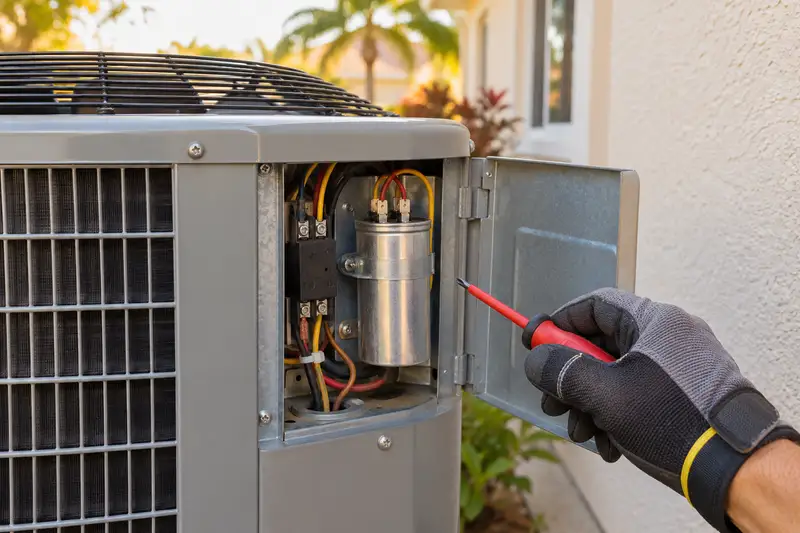
- Capacitor and contactor, the parts that start the compressor and fan.
- Refrigerant pressures and the temperature of the air leaving the vents.
- Filter, blower and the indoor coil for airflow and ice.
- Condensate drain, pan and float switch for clogs and leaks.
Once the cause is clear, you hear what it is, what the repair involves and whether anything else looks close to failing.
Why readings come before parts
Measuring matters because several faults look alike from the outside. A weak capacitor, a failing contactor and a low charge can all leave a house warm in the afternoon. Readings at the outdoor unit and the vents show which one it is, so the right part gets replaced the first time.
If more than one problem turns up, such as a clogged drain alongside a weak start part, you hear about each and choose what to fix now.
Repair the part or replace the system
Most calls end with a repair. Now and then the honest answer is that a system has reached the end of its useful life. These are the signs that usually decide it.
Repairing is usually the right call when
- The fault is one part, such as a capacitor, contactor or drain.
- The compressor and coils are sound.
- The system has been reliable until now.
- Replacement parts for your model are still available.
A new system is worth weighing when
- The compressor has failed on an older unit.
- Refrigerant leaks keep coming back.
- Repairs are stacking up year after year.
- The house never feels dry or evenly cool.
The full repair or replace guide walks through each of these in more detail.
Signs your AC needs attention soon
Most AC problems in Cape Coral show one of these warning signs before the system stops completely. Here is what each one usually means.
Air from the vents feels cool, not cold
Often a dirty filter, a weak capacitor or low refrigerant. The longer it runs like this, the harder the compressor works.
The outdoor unit hums but the fan sits still
A failed capacitor or a stuck fan motor. Switch the system off at the thermostat to protect the compressor.
Water around the air handler
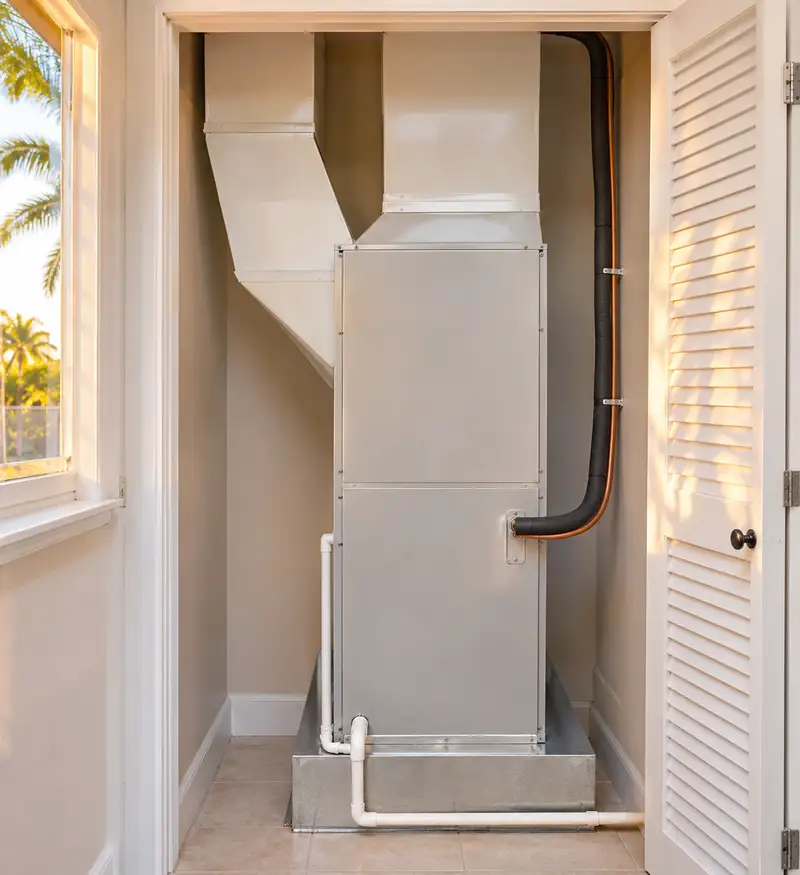
A clogged condensate line or a full pan. In a humid climate that line carries a lot of water every day.
Frost forming on the copper pipe or indoor coil
Starved airflow or a low charge. Switch cooling off and give the ice time to melt first.
The house feels damp even when it is cool
The system may be oversized, the coil dirty or the fan setting wrong. Humidity matters as much as temperature here.
New buzzing, rattling or squealing
Loose panels, a worn motor bearing or an electrical fault. Noises are early warnings worth taking seriously.

Storm season and your air conditioner
Rain, wind and power outages
Summer and fall storms can damage an air conditioner in Cape Coral even when the house itself is fine.
Outdoor units are built to handle rain, but flooding, flying debris and power that flickers on and off can all damage them.
- Switch the system off at the thermostat when power is flickering.
- Give it a few minutes once power is back before switching cooling on.
- Clear branches and leaves from around the outdoor unit after a storm.
- If the unit sat in standing water, have it checked before running it.
Our guide on resetting an air conditioner safely covers what to do after an outage.
Keeping a system healthy between visits
A few habits do more for an air conditioner here than anything else. None of them need tools.
- Check the filter monthly and replace it when it looks gray or dusty.
- Trim plants so the outdoor unit has two feet of clear space around it.
- Pour a cup of white vinegar into the condensate line access every few months where the system has one.
- Keep supply vents and return grilles open and unblocked by furniture.
- Set the thermostat to a steady temperature rather than big swings.
- Book a maintenance visit before the hottest stretch of the year.
Why the drain and the outdoor coil matter so much
The condensate line is the part most often forgotten. In a humid climate the AC pulls a lot of water out of the air, and that water runs through a thin pipe to the outside. Algae and dust can block it, and when it backs up the pan overflows or a float switch shuts the system off.
Outdoor units also collect grass clippings, leaves and pollen on their fins. A gentle rinse using a garden hose once the power is off helps the unit shed heat. Never use a pressure washer on the fins, as it can bend them flat.
For the full checklist, see AC maintenance visits.
Guides for Cape Coral homeowners
These guides answer the questions Cape Coral homeowners ask most about their air conditioning. Each one includes steps you can follow before a technician visits.
Troubleshooting guide
Buzzing, clicking, hissing and banging, and what each one points to.
Decision guide
The signs that point toward a repair and the ones that point toward a new system.
Planning guide
What to check before the heat, through storm season and on the first cold nights.
Step by step guide
The right order for breakers, the disconnect and the drain pan after an outage.
Quick answers
Short replies to the questions homeowners ask most, sorted by topic.
ZIP codes we take calls from
AC Repair Cape Coral Florida takes calls from homes across Cape Coral, Florida. Homes in any of these ZIP codes can reach us, and a local technician can visit.
- 33904
- 33909
- 33914
- 33990
- 33991
- 33993
Unsure whether your street is covered? Tell us your ZIP code and we will let you know right away. Every service and guide on this site is written for homes in these ZIP codes.
AC repair questions from Cape Coral homeowners
Here are short answers to common AC repair questions. The repair pages and guides explain each topic in more detail.
Why would the AC run without cooling the house?
A dirty filter, a failing capacitor, low refrigerant, a frozen coil or an outdoor unit that is not running are the usual causes. Check the filter and the breaker first, then switch cooling off if ice is forming.
What should I check before calling for AC repair in Cape Coral?
Check the thermostat is on Cool with a target under the room temperature, the filter is not clogged, the breakers are on and the outdoor unit is running. Look for water around the air handler too.
Can I reset my AC myself?
Switch it off at the thermostat, look at the breaker, then give it a few minutes before switching back on. A breaker that trips twice should stay off until a technician looks.
Is it safe to keep the AC on while it makes an odd noise?
It is safer to switch it off at the thermostat. Grinding, screeching or loud buzzing often means a motor or electrical part is struggling, and running it can turn a small repair into a bigger one.
Why does my AC keep turning on and off?
Short cycling can come from a thermostat in a hot spot, a dirty filter, an oversized system or a refrigerant or electrical fault. It is worth having checked, because it wears parts quickly.
Is a burning smell from the vents serious?
A brief dusty smell the first time heat runs is common. A sharp electrical smell in cooling mode is not, so switch the system off and call.
Why does my AC struggle most in the afternoon?
That is when the heat is highest and the system works hardest. Dirty coils, weak start parts and low charge show up first then.
Why does my outdoor unit hum while the fan stays still?
A dead capacitor or a jammed fan motor is the usual cause. Turn cooling off right away, because the compressor heats up fast when the fan cannot help.
Can a dirty outdoor coil cause weak cooling?
Yes. Grass, leaves and dust on the fins stop the unit shedding heat, so the house gets warmer on hot afternoons. A gentle rinse helps, and a maintenance visit cleans it properly.
Why is water dripping near my air handler?
Most often the condensate drain line is clogged and the pan has filled. Turn the system off to stop the overflow and keep the area dry until it is cleared.
Is ice on my AC lines a problem?
Yes. Frost there usually means poor airflow or low refrigerant. Switch cooling off, let the fan run alone until it melts, then have the cause found.
Why is the house still sticky while the AC runs?
An oversized system, a dirty coil, a fan left on constantly or low refrigerant can all reduce how much moisture the AC removes.
Can a clogged drain shut my AC off?
Yes. A float switch cuts power when the pan fills, so the system looks dead until the drain is cleared.
How often should the filter be changed?
In a home where the AC runs much of the year, checking it every month and replacing it when it looks gray is a good habit.
What temperature should I set my thermostat to in summer?
A steady setting you find comfortable works better than big swings. Very low settings make the system run longer without cooling the house any faster.
How do I keep my AC from failing in the first heat wave?
Book a maintenance visit before the hottest part of the year, change the filter every month and keep the condensate drain clear.
What should I do with my AC during a storm?
Switch it off at the thermostat while power is flickering, then check the outdoor unit for debris before restarting.
Is it safe to rinse my outdoor unit?
Yes, gently with a garden hose and the power off at the disconnect. Never use a pressure washer on the fins.
Can a power outage damage my AC?
Unstable power can strain start parts and control boards. Switch the system off while power flickers and restart it once the supply has been steady for a few minutes.
Does shutting the vents in spare rooms help?
Usually not. Closing many vents cuts airflow over the coil, raises duct pressure and can even freeze the coil. Keep most of them open.
Should I keep the fan on Auto?
Usually yes. On Auto the fan stops between cycles, which lets water drain off the coil instead of blowing back into the house.
Do you work on heat pumps too?
Yes. A heat pump cools and heats with the same outdoor unit, and many homes in Cape Coral use one.
Will the technician explain the repair first?
Yes. The technician explains the cause in plain words and sets out your options before starting, and you decide what happens next.
How long does an AC repair usually take?
Many repairs, such as a capacitor, a contactor or a cleared drain, are done in a single visit. Refrigerant leaks and larger part replacements can take longer, and you hear the plan before any work starts.
Which areas do you take calls from?
We take calls from homes across Cape Coral, Florida. The full ZIP code list is further down this page.