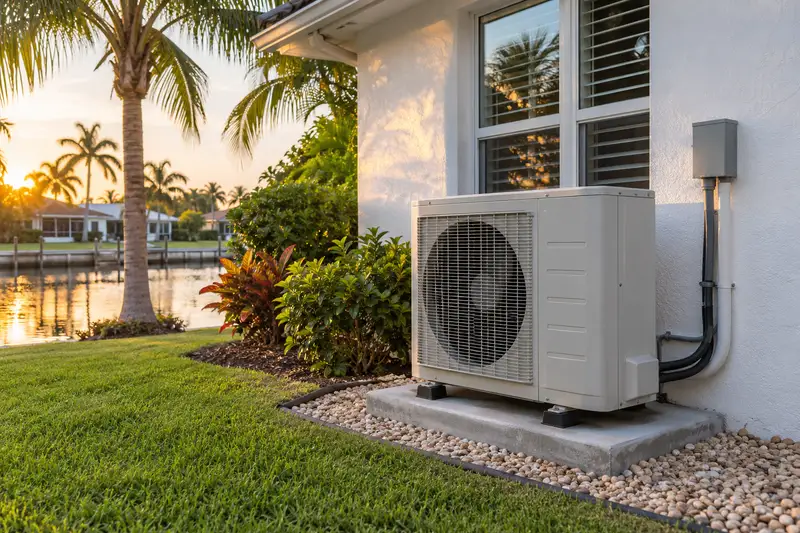
How a heat pump cools and heats your home
A reversing valve lets it run in both directions
A heat pump works like an air conditioner that can also run backwards. During summer it moves heat from inside the house to the outdoor unit. On cold nights a reversing valve flips the flow, and the same refrigerant carries heat from the outdoor air into the house.
Heat pump repair in Cape Coral is mostly cooling work, because the cooling side runs for much of the year. The heating side only runs on the few cold nights of winter, and that is often when a hidden fault shows up.
Backup heat strips and extra wear on the outdoor unit
Many heat pumps also have electric heat strips in the air handler. They help on the coldest mornings and take over if the heat pump cannot keep up. If your system only heats with the strips, the slow warmup is a clue the heat pump side is not working.
Because the outdoor unit works in both seasons, its capacitor, contactor and fan motor get more hours than a cooling only system. Those parts are where most heat pump repairs start.
Heat pump problems in summer and winter
Heat pump problems in Cape Coral look different in each season, because the same unit cools all summer and heats on cold nights.
In cooling season
- Air from the vents is cool but not cold.
- The outdoor fan hums but does not spin.
- Ice on the copper line at the air handler.
- The system runs constantly in the afternoon.
- Water collecting near the indoor unit.
On cold nights
- Air feels lukewarm in heat mode.
- The outdoor unit frosts over and stays frosted.
- Steam from the outdoor unit that never stops.
- Heat comes only from the backup strips.
- A loud whoosh when it switches modes that never settles.
A short burst of steam and a whoosh during a defrost cycle is normal. A unit that stays coated in frost, or never seems to finish defrosting, is not.
Heat pump checks you can do by hand
- Confirm the thermostat mode matches what you want, Heat or Cool, and not Emergency Heat.
- Replace a dirty filter, since heat pumps are sensitive to low airflow.
- Check the breakers for both the outdoor unit and the air handler.
- Clear leaves and debris from around the outdoor coil.
- In heat mode, give a defrost cycle ten minutes to finish before worrying.
If none of these change anything, the fault is likely inside the unit and worth a technician visit. Note what the outdoor unit is doing, whether the fan turns and whether you hear the compressor, because those details narrow the search quickly.
What a heat pump repair visit covers
A visit for heat pump repair in Cape Coral checks both cooling and heating, not only the mode that failed. It covers everything an AC repair visit does, plus the parts only a heat pump has.
Reversing valve
The valve that switches between cooling and heating. A stuck valve leaves the system in one mode.
Defrost controls
The board and sensor that clear frost from the outdoor coil on cold, damp nights.
Starting parts
Capacitor and contactor, which handle more starts on a heat pump than on an AC.
Refrigerant charge
Correct charge matters in both modes. Low charge shows as weak heating and cooling.
Backup heat strips
Checked so they help on cold mornings without running all the time.
Airflow and drain
Filter, blower, indoor coil and condensate line, the same as any AC.
Once the cause is found, you hear what the repair involves before anything is replaced, and the choice stays with you.
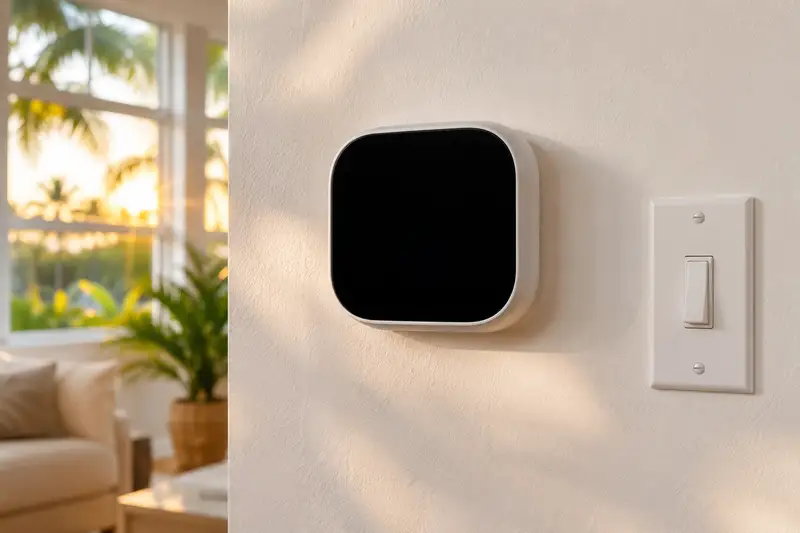
Getting a heat pump ready for the first cold night
The heating side may sit unused for months. Testing it on a mild evening, before you actually need it, catches problems while there is time to fix them.
Switch to Heat
Set the thermostat a few degrees above the room and wait several minutes.
Feel the vents
The air should feel warm, not just room temperature.
Listen outside
The outdoor unit should run smoothly, with no grinding or loud buzzing.
Notice the smell
A faint dusty smell the first time is normal. A burning smell that lingers is not.
How to make a heat pump last longer
- Change the filter monthly while the system runs every day.
- Keep shrubs and fences at least two feet from the outdoor unit.
- Avoid using Emergency Heat unless the heat pump has failed.
- Book a maintenance visit each year, ideally before the hottest months.
Heat pumps work in both seasons, so a yearly check covers both jobs at once. See AC maintenance visits for what that includes.
Heat pump questions
Is a heat pump the same as an air conditioner?
It works the same way in cooling mode. The difference is a reversing valve that lets it run backwards and heat the house.
Do heat pumps need more maintenance than AC units?
They work year round, so parts wear a little faster. A yearly check is a good habit.
Can a heat pump freeze up in summer?
Yes, just like an AC. Low airflow or low refrigerant can ice the indoor coil.
Why does my heat pump run constantly?
On very hot or cold days long run times are normal. Constant running on mild days points to low charge, a dirty coil or a thermostat problem.
Why is my heat pump steaming in winter?
It is probably in a defrost cycle, which melts frost off the outdoor coil. Short bursts of steam are normal.
What does Emergency Heat do?
It runs only the electric backup strips and skips the heat pump. Use it only if the heat pump has failed.
Why does my heat pump blow cool air in heat mode?
During defrost it may briefly blow cooler air. If it never warms up, the reversing valve, refrigerant charge or defrost controls may be at fault.
Can I run my heat pump in Emergency Heat all winter?
It will keep the house warm, but it bypasses the heat pump and works the backup strips hard. Use it only until the heat pump is repaired.
Can a heat pump handle a cold night here?
Yes. Most nights are well within what a heat pump handles, and backup strips help on the coldest mornings.
Why does my heat pump click when it switches modes?
A click from the reversing valve or a relay is normal. Loud banging or a click with no change in mode is worth having checked.
Why does my heat pump smell dusty the first time I switch to heat?
Dust settles on the backup heat strips over the summer and burns off the first time they run. A smell that lingers or smells electrical is worth checking.
Other repairs heat pumps often need
- Capacitor and ContactorHumming unit, fan not spinning
- Refrigerant LeaksHissing, oily spots, weak cooling
- Thermostat RepairBlank screens and wrong readings
We take calls for heat pump repair in Cape Coral from homes across the city. Tell us which mode is giving trouble and a local technician can come out.